On 30 June 2026, the first Mission Soil Investment Forum took place in Brussels, bringing together investors, policymakers, financial institutions, researchers, businesses, philanthropies and land management practitioners to explore how innovative business models, financing mechanisms and strategic partnerships can accelerate the transition towards healthy and resilient soils across Europe.
A central theme was measurement. Robust monitoring and reliable impact data are essential to build investor confidence and unlock financing. Discussions also highlighted how the Soil Monitoring Law, which recently entered into force, provides a shared framework to support these efforts.
The Forum showcased a range of initiatives, from startups to Living Labs, demonstrating that natural capital investments can already deliver tangible and measurable results.
From Field to Finance: Living Labs as Investment Enablers
SOILL took part in the parallel session "From Field to Finance: Innovation, Philanthropy and Living Labs as Investment Enablers", which explored how innovators, philanthropic actors, Living Labs and corporate value-chain actors contribute to demonstrating and scaling soil health solutions across the EU.
Living Labs were at the heart of the discussion, and for concrete reasons. They aggregate diverse stakeholders, stay grounded in local realities while connecting to broader networks, and generate the kind of on-the-ground evidence that investors need before committing capital.
They also help reduce the transaction costs that make co-creation expensive and slow. As one participant noted, "funders increasingly value stakeholder participation because it directly improves investment valuation criteria", and this is precisely where Living Labs can make a difference.
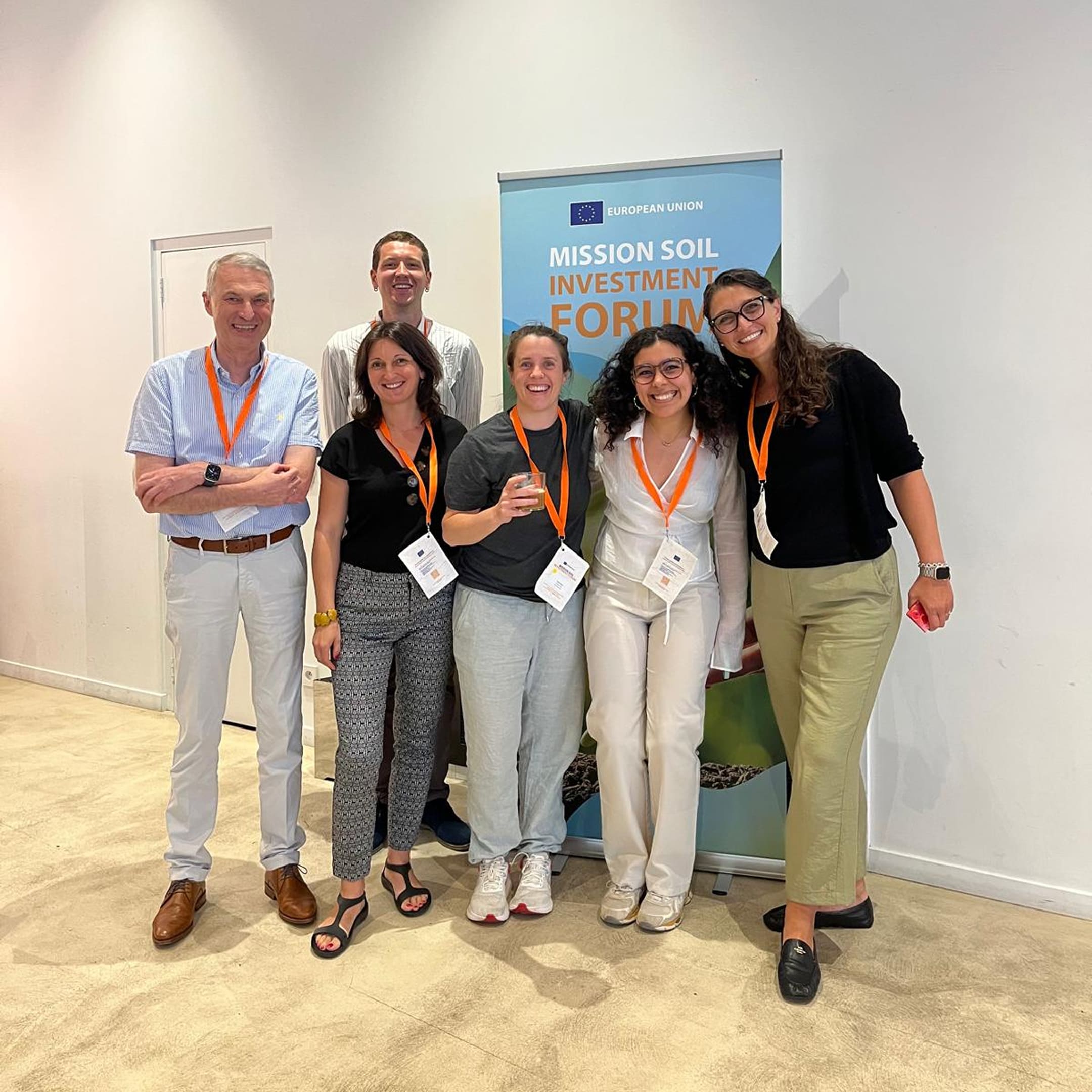
SOILL Consortium at the Mission Soil Investment Forum, 30 June 2026
The Mission Soil GOV4ALL project coordinator shared that the project's contribution to demonstrating soil health solutions is still at an early stage. Right now that means gathering stakeholders willing to inspire and be inspired, with the goal of restoring motivation and capacity in rural communities. Their Living Labs are progressing through the co-creation of governance models for regeneration hubs, aimed at restoring soil health in the Mediterranean region and creating long-term, locally rooted income for the communities involved.
As was widely acknowledged at the Forum, four years is a short timeframe to show results that satisfy investors, a challenge common to most Living Lab initiatives across Europe.
Key Takeaways: The Transition from Research to Implementation
Several messages from the Forum speak directly to the work of SOILL and its Living Labs:
- Scale matters. Investors don't engage with small and fragmented opportunities. Farmers need to be aggregated, and Living Labs are well placed to do this;
- Environmental benefits alone are not enough. The economic case for soil health needs to be made clearly and consistently;
- There is an information gap on both sides. Investors don't know what they're buying, and projects don't know what investors want. Living Labs, with their multi-stakeholder and evidence-generating model, are built to close this gap;
- Philanthropy is a catalyst, not a replacement. It complements public funding and helps bring private actors into the conversation, but it still requires proof of concept before committing;
- Enabling conditions matter. Certification schemes, advisory services, reduced transaction costs, and public-private partnerships are all necessary to turn Living Lab potential into investment reality.
The overall message was unambiguous: Europe has the knowledge. What's needed now are the financial, policy and business conditions to put it to work at scale.