This page brings together all the resources SOILL has developed to support the Mission Soil Living Labs network. Some are built for Living Labs already up and running. Others help applicants prepare strong proposals and find the right partners. Many serve the broader community of land managers, researchers, public authorities, and citizens working on soil health.
The collection includes interactive maps showing Living Labs across Europe, a digital collaboration platform, expert helpdesks, matchmaking tools for building consortia, business planning frameworks, training materials, and guidance for navigating funding calls. Everything here has been shaped in collaboration with the people using it — Living Labs working across different regions and contexts.
- SOILL Hub
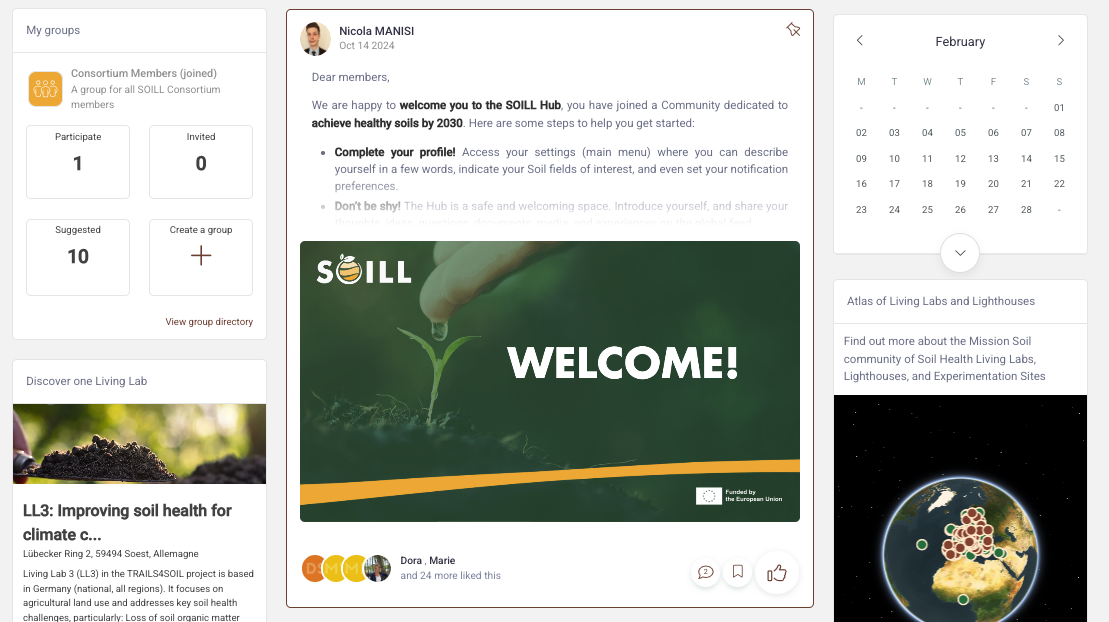
The SOILL Hub is the central digital platform for the Mission Soil community. It connects Soil Health Living Labs, Lighthouses, researchers, policymakers, land managers, businesses, and citizens in one shared space for collaboration, knowledge sharing, and innovation. The Hub serves as a single access point to the people, tools, and resources across the network.
A free account gives you access to a personalised newsfeed with posts, events, and updates from the people and groups you follow. From there, you can navigate to user profiles, organisation directories, thematic groups, events, and real-time chat. The Hub supports both public and private groups for open collaboration or closed team discussions. Groups can be organised around topics, projects, or stakeholder interests, with tools for administrators to manage participation and content.
The platform includes an event management system for browsing and joining gatherings — online or in-person — with integrated video conferencing through the open-source JITSI platform. A dedicated chat module supports quick exchanges and real-time collaboration. User and organisation directories let you search for experts, partners, or peers by location, expertise, or institutional background.
Living Labs and Lighthouses can create dedicated profile pages with collaborative tools, document sharing, and team invitations. These pages appear on the Hub's Atlas — an interactive map showing all Living Labs and Lighthouses across Europe. The Knowledge Hub centralises tools, publications, guidelines, and materials from the SOILL consortium and partners, with filtering by topic, geography, language, and Mission Soil relevance.
Living Labs can use a self-assessment tool to track progress across five dimensions: strategy, operations, openness, user engagement, and impact. The tool supports semi-annual reporting and includes examples and guidance. A matchmaking tool helps stakeholders find partners, share project ideas, and build consortia. The Helpdesk connects users with experts who respond to questions on soil science, Living Lab methodology, or citizen engagement within five working days. The platform also includes a Help Center with FAQs and a Code of Conduct.
- Atlas of Mission Soil Living Labs and Lighthouses
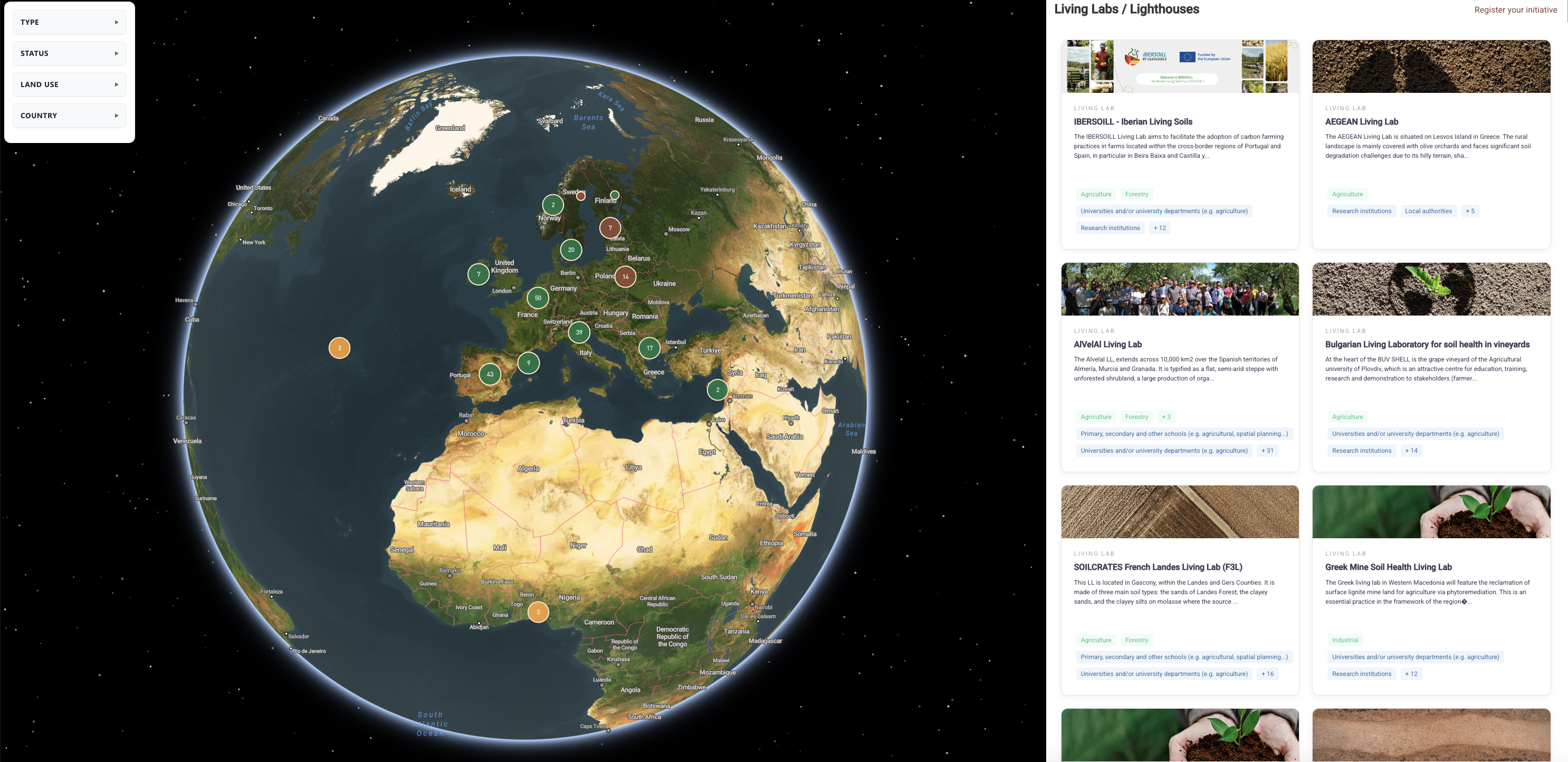
The Atlas is an interactive map showing all Mission Soil Living Labs, Lighthouses, and Experimental Sites currently operating across Europe. It provides a structured overview of active initiatives by location, type, and context.
The map filters by initiative type (Living Lab, Lighthouse, or Experimental Site), category, soil type, and country. Each pin links to a profile page with details on activities, goals, and team members. This makes the Atlas useful for identifying potential partners and understanding how Mission Soil is being implemented across different regions.
Mission Soil Living Labs are place-based research and innovation ecosystems that bring together land managers, scientists, businesses, and citizens to co-design, test, and evaluate solutions for soil health. They operate across agriculture, forestry, industrial, urban, and natural or semi-natural contexts. Experimental Sites are individual locations within or connected to a Living Lab. Sites demonstrating exceptional results can evolve into Lighthouses — model sites for demonstration, training, peer learning, and communication. More information and direct connections to Living Lab teams are available through the SOILL Hub.- Helpdesk
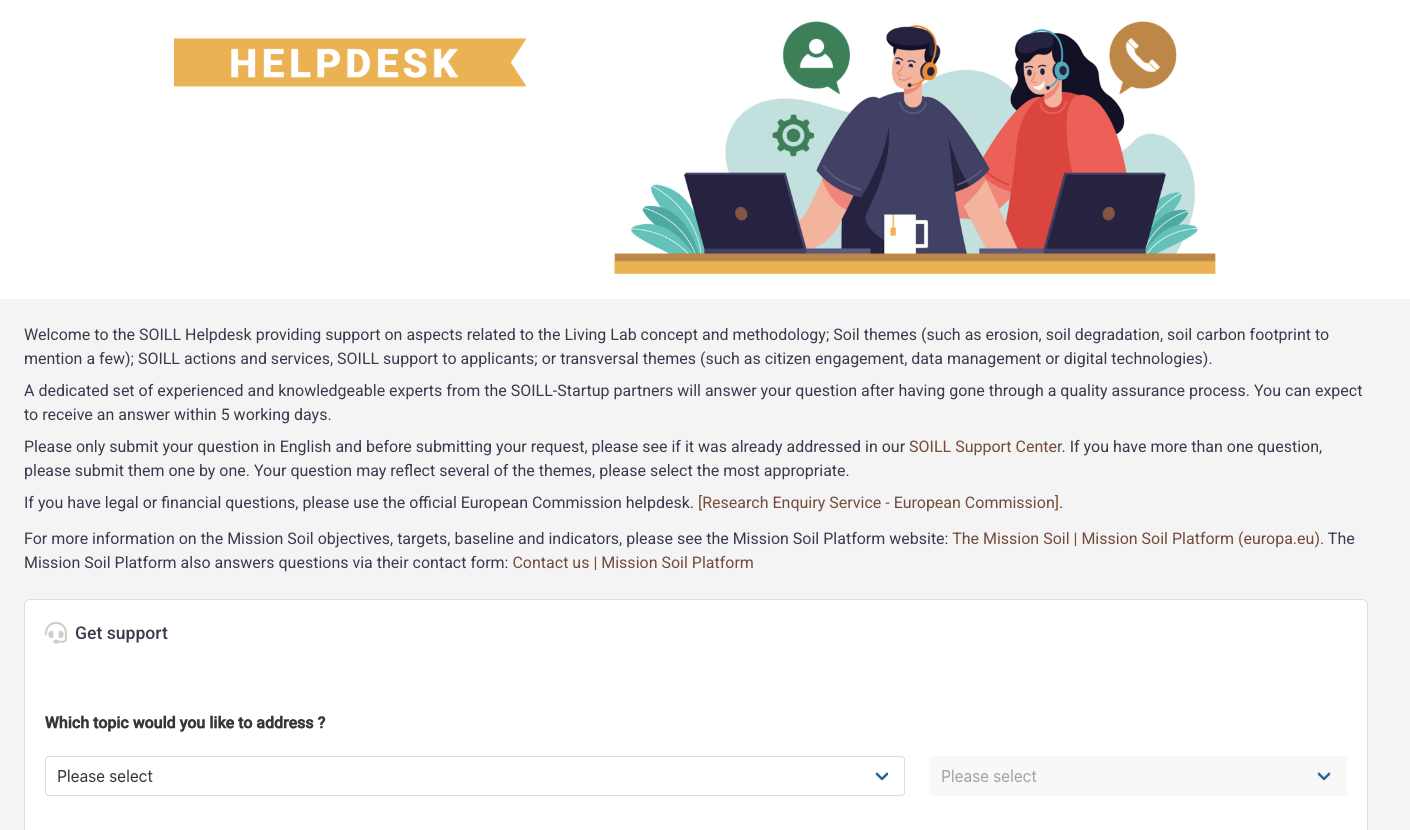
The SOILL Helpdesk is a free expert support service for all soil stakeholders. It serves Mission Soil Living Labs and Lighthouses, organisations preparing proposals for funding calls, and anyone with questions about soil health topics, Living Lab methodology, or SOILL services like training, knowledge exchange, and engagement.
The Helpdesk covers land degradation, soil organic carbon, erosion, soil pollution, soil literacy, soil carbon footprint, and current Mission Soil funding opportunities. Each topic is handled by a dedicated team of specialists within the SOILL consortium. Responses typically arrive within five working days.
Access requires a free SOILL Hub account. Once logged in, visit soill2030.app/helpdesk or use the menu icon in the top-right corner of the Hub. Check the FAQ section before submitting. Questions must be submitted one at a time, in English, with the most relevant theme selected. Financial or legal queries should go to the European Commission's official Research Enquiry Service. Technical issues with the Hub itself go to the IT Help Centre.- Map of European and Emerging Soil Living Labs
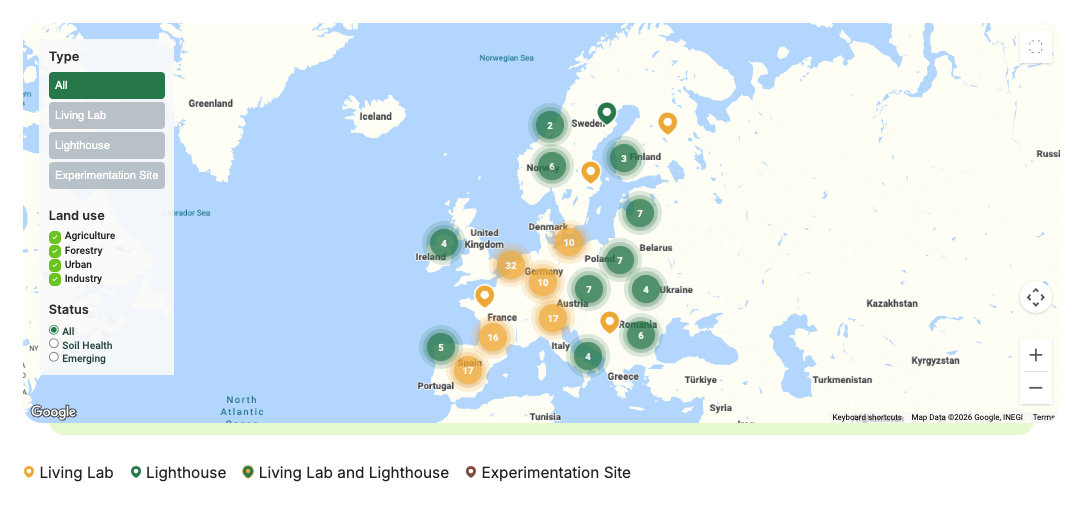
This map covers soil-related initiatives beyond the Mission Soil framework. It includes European Soil Living Labs — initiatives aligned with Mission Soil criteria but not directly funded under its dedicated topics — and Emerging Soil Living Labs, which are on-the-ground experiments still working toward alignment. The map was developed under the PREPSOIL project in coordination with the Mission Secretariat and the European Research Executive Agency.
Initiatives can be filtered by type (Living Lab, Lighthouse, or Experimental Site), land-use context (agriculture, forestry, urban, industrial, natural and semi-natural), and status level, reflecting alignment with Mission Soil objectives and the PREPSOIL taxonomy. The map shows where different types of soil work are happening and at what stage of development.
Soil health initiatives not yet on the map can be registered through the platform. A built-in assessment tool evaluates project maturity and alignment with Mission Soil criteria, identifying areas for improvement and tracking progress over time.
- Publications Library
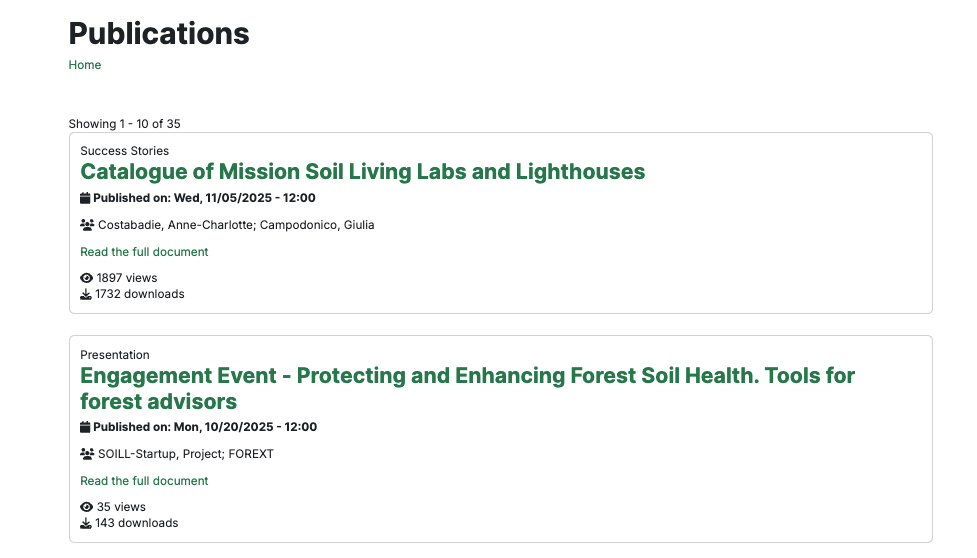
The Publications Library gives you open access to all publicly available SOILL outputs and materials. The collection spans a wide range of document types, including the Catalogue of Mission Soil Living Labs and Lighthouses, event slides and posters, factsheets, success stories, monitoring and evaluation guidelines, qualitative assessment questionnaires, and key recommendations for the Living Lab community.
All publications are produced to open research standards and are free to read and download. The library contains methodological guidance, monitoring frameworks, and examples from Living Labs and Lighthouses across Europe. Materials are produced by the SOILL consortium and reflect knowledge developed through direct engagement with the network.
- Business Model Canvas
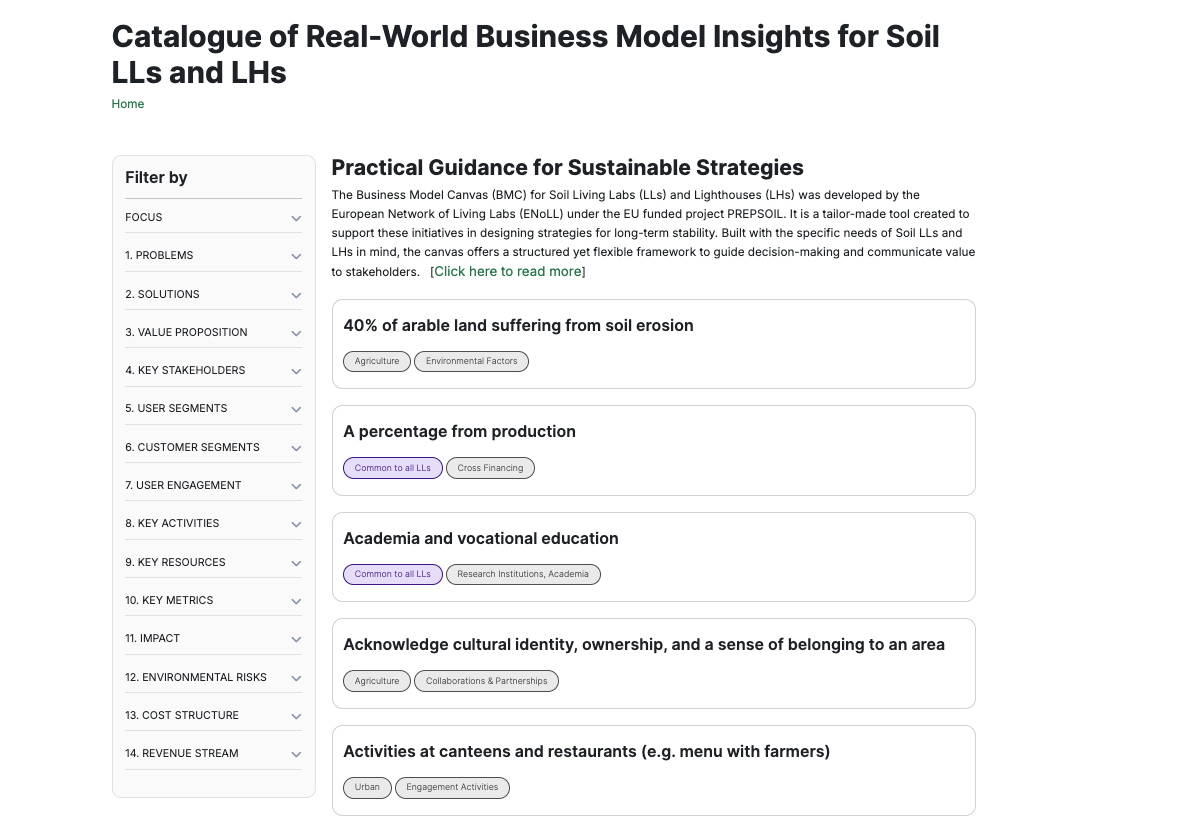
The Business Model Canvas (BMC) is a strategic planning tool developed specifically for Soil Living Labs and Lighthouses. It provides a structured framework for defining how an initiative creates, delivers, and captures value — information needed to communicate clearly with funders, partners, and communities.
The canvas was developed through a year-long collaborative process involving Living Labs, Lighthouses, and sector experts across three phases: understanding existing needs, co-designing the framework, and evaluating it in practice. It includes two overarching components (initiative objective and land-use type), fourteen core elements covering stakeholders, value proposition, cost structure, revenue streams, and other dimensions, plus dedicated spaces for contextual input.
A step-by-step user guide walks through filling in the canvas, with definitions and guiding questions for each section. A catalogue of real-world insights from Living Labs and Lighthouses across agriculture, forestry, industrial, and urban contexts is available, filtered by relevance to help inform different models. The BMC and accompanying guide can be downloaded from the platform.
- Video Gallery
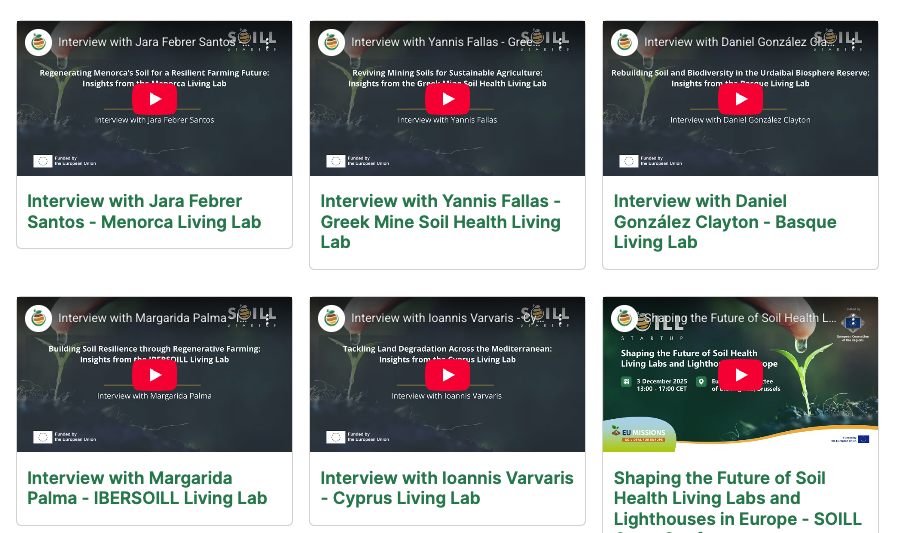
The Video Gallery brings together interviews and recordings featuring project partners, Mission Soil representatives, and — most importantly — the Living Labs and Lighthouses themselves. Hearing directly from the people doing this work on the ground offers a perspective that written materials cannot fully capture. Browse the gallery to learn about the experiences, challenges, and achievements of initiatives from across Europe, and to get a real sense of what a Soil Health Living Lab looks like in practice.
- Factsheets
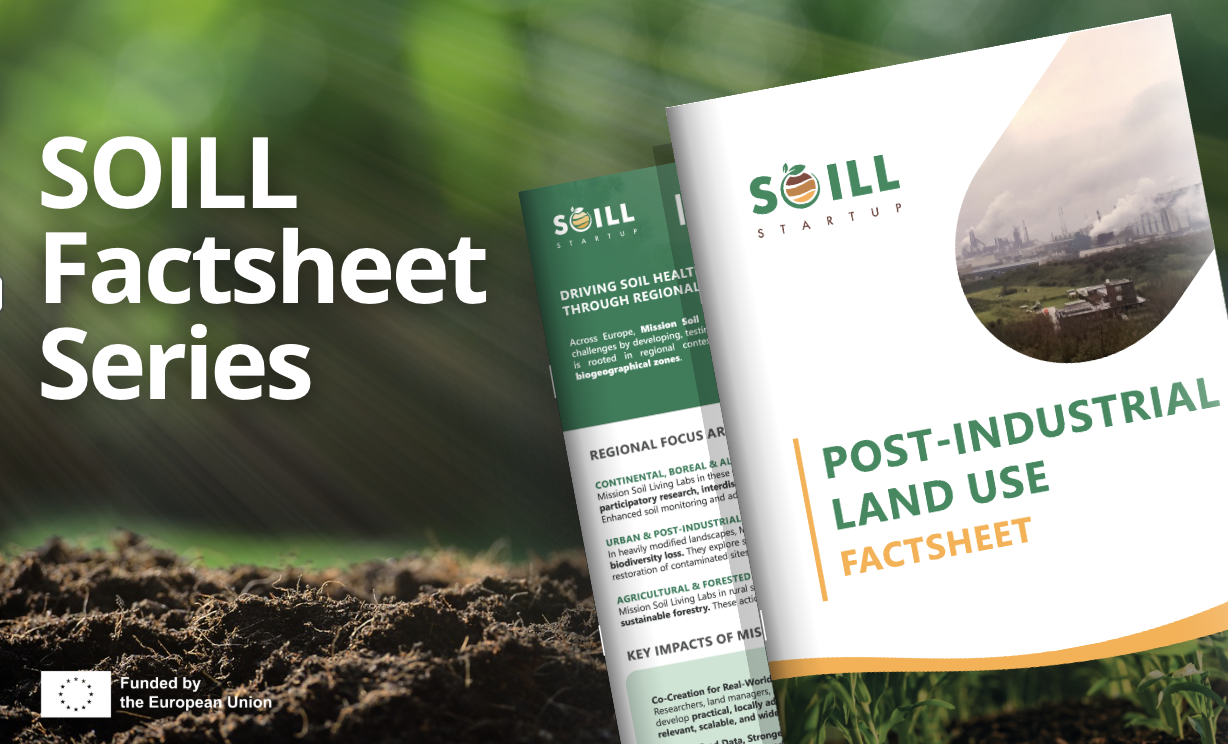
The factsheets are a particularly important resource for anyone preparing a proposal for a Mission Soil funding call. Building on the groundwork of the NATI00NS project, they provide clear, accessible guidance on the most relevant aspects of setting up a Mission Soil Living Lab or Lighthouse.
The set includes five thematic factsheets covering each of the main land-use types — Agriculture, Forestry, Industrial, (Semi-)Natural, and Urban — and three cross-cutting factsheets on Biogeographical Regions, Funding Opportunities, and Ecosystem Services. Together, they offer a practical overview of the Mission's goals, eligibility considerations, and implementation pathways across Europe's diverse landscapes and socio-ecological conditions.
If you are designing a proposal and want to make sure your approach is well-grounded in the Mission's framework, the factsheets are a good place to start. Each one is short, focused, and written with applicants in mind.- Matchmaking Opportunities
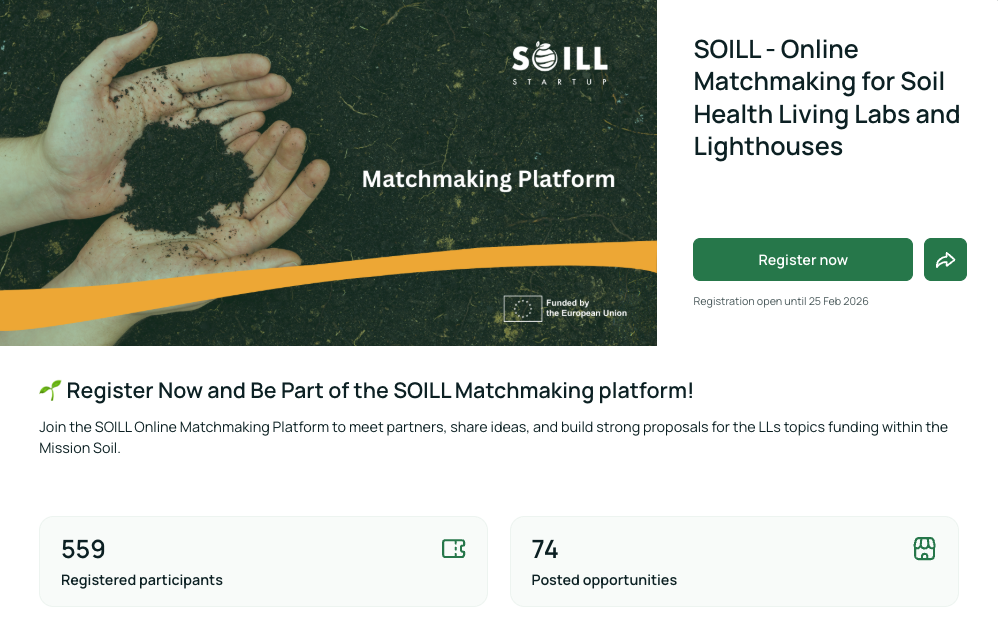
The SOILL matchmaking platform, powered by b2match, helps potential applicants find consortium partners. It is open to anyone in the EU or Horizon Europe-associated countries, including public sector representatives, research organisations, businesses, citizen associations, and other stakeholder groups.
The platform allows users to create a profile, search for potential partners by sector and interest, and schedule one-to-one online meetings. It is designed for teams forming consortia to apply for 2026 Mission Soil topics focused on Living Labs across agricultural, forestry, urban, industrial, or (semi-)natural settings. Account creation is free.
- SOILL Mentors
SOILL has assembled a network of national mentors to support applicants preparing proposals for Mission Soil funding calls on establishing Soil Health Living Labs. Mentors can help clarify ideas around specific soil health challenges, work through the initial steps of setting up a Living Lab at regional level, and advise on navigating the early phases.
All mentors work under non-disclosure agreements, so ideas, plans, and potential partnerships can be shared confidentially. Mentors complement rather than replace the Helpdesk — specific technical or thematic questions should still go to the Helpdesk team. Mentors are available in different countries and can be contacted based on who best fits the applicant's needs.
- Pathway to a Competitive Proposal
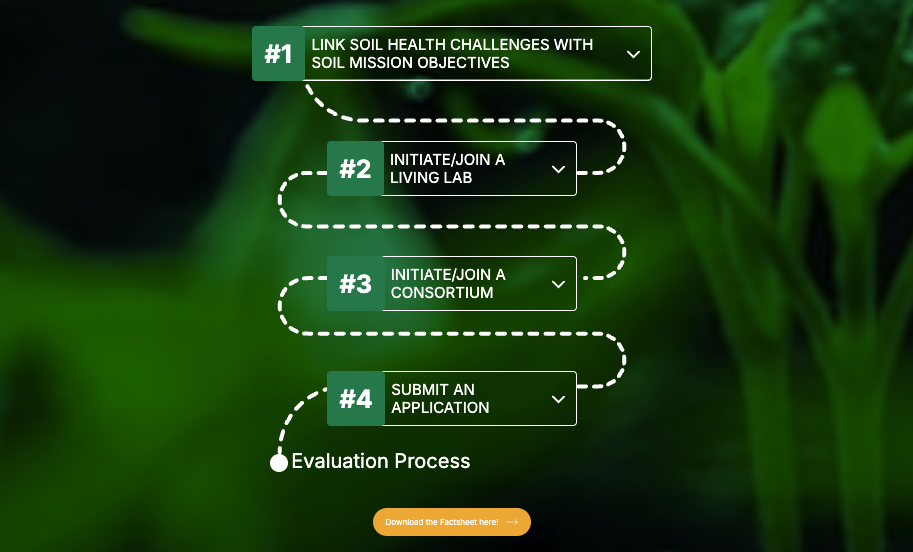
The Pathway to a Competitive Proposal is a practical navigation guide for anyone working toward a submission under the EU Mission "A Soil Deal for Europe." It maps out the key steps in the application process and links each step to the most relevant support available — from PREPSOIL's Soil Needs Assessment and the matchmaking platform to mentoring, factsheets, and guidance on setting up a Living Lab.
Think of it as a roadmap: it does not replace any single resource, but it shows you how they all connect and when to use each one. Whether you are at the very beginning of shaping an idea or already deep into consortium building, the Pathway helps you see where you are in the process and what to do next.